

Prebid has become the industry standard for header bidding, giving publishers greater transparency, flexibility, and control over programmatic advertising.
Traditionally, digital ad auctions have taken place client-side, directly in the user's browser. This approach is relatively simple to implement and benefits from browser-based user signals. However, it can increase page latency, add JavaScript weight, and provide less control over how data is handled.
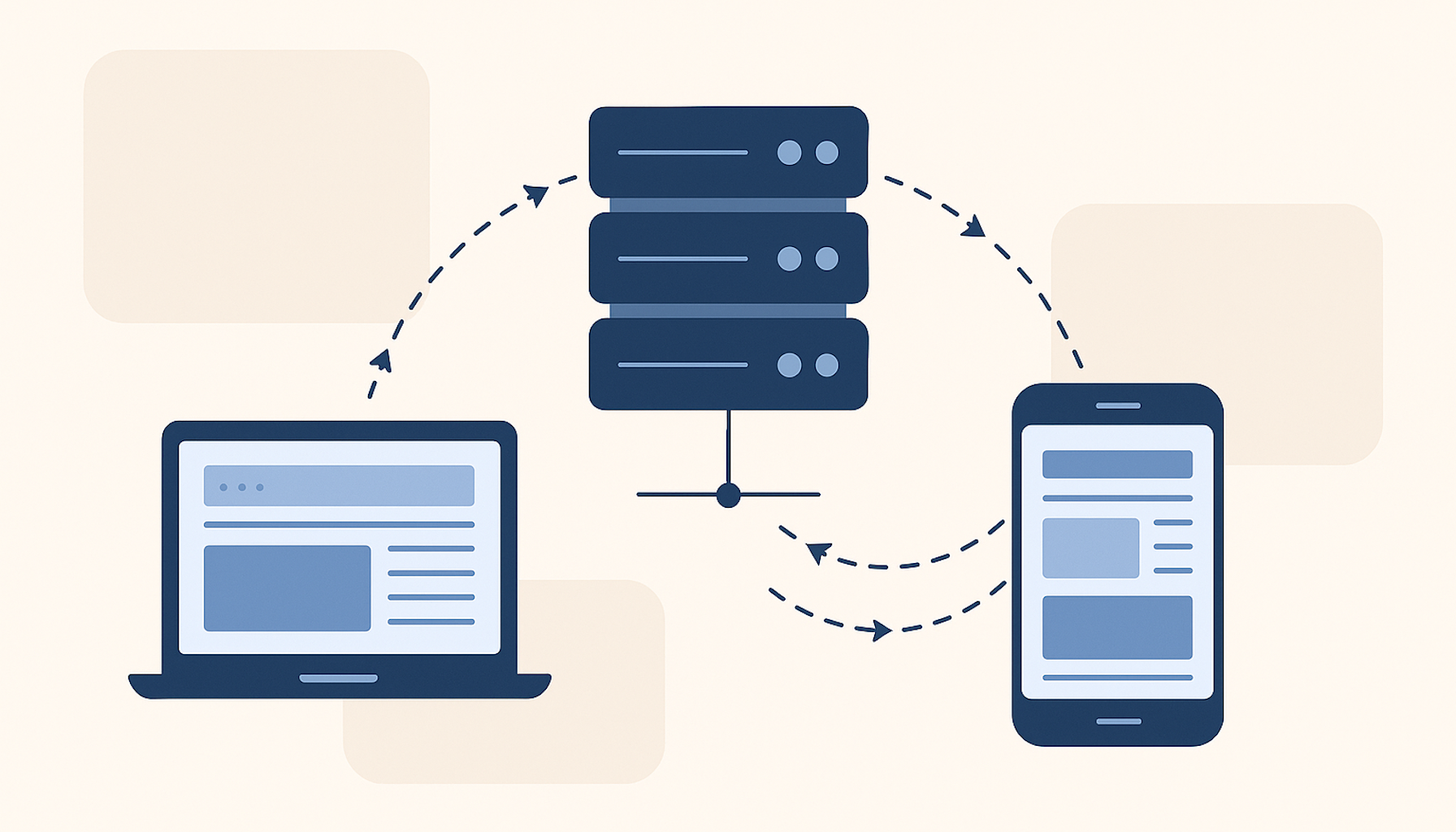
As publishers look to improve page performance, scalability, and privacy compliance, more are exploring server-side Prebid. Unlike client-side implementations, server-side moves the auction to a dedicated server, reducing browser workload while offering greater infrastructure flexibility. A growing number of publishers are also adopting parallel bidding, where client-side and server-side auctions run simultaneously to maximise demand.
Each approach comes with its own strengths and trade-offs. Rather than relying on assumptions, Relevant Digital wanted to understand how they perform in real publisher environments.
How We Tested the Different Prebid Setups
To compare all feasible approaches, we conducted a multivariate test in a live publisher environment using Relevant Yield.
Traffic was divided into:
-
25% Client-side Prebid
-
25% Server-side Prebid
-
50% Parallel bidding (Client-side + Server-side)
The tests covered both desktop and mobile web environments.
We monitor these metrics in real-time in every single impression, with high granularity, using HB Analytics:
- eCPM
- Revenue
- Bid rate
- Fill rate
- Viewability
- Load times
- Timed-out bids
The tests included several major SSPs, including Adform, Equativ, Magnite, PubMatic, and Xandr.
Relevant Yield was used to configure, measure, and analyse each implementation. As an independent Prebid management platform with an integrated Prebid Server, Relevant Yield has supported server-side Prebid implementations across web, mobile web, and apps since 2020.
What the Results Showed
Compared to similar tests we conducted a few years ago, the performance gap between implementation methods has narrowed considerably.
Revenue and eCPM
Parallel bidding delivered the strongest overall performance.
Client-side and parallel bidding generated very similar revenue, although parallel bidding maintained a slight advantage, particularly on desktop.
Server-side generated slightly lower revenue overall but remained highly competitive.
At the SSP level, performance varied considerably. Some demand partners achieved higher eCPMs server-side, while others participated in fewer auctions, highlighting that implementation performance depends partly on individual SSP behaviour.
Bid rate
Bid rate differences varied by SSP.
In desktop environments, some SSPs participated less frequently in server-side auctions than client-side auctions. On mobile, however, certain SSPs achieved stronger bid rates server-side.
This reinforces the importance of evaluating partners individually rather than assuming all bidders behave similarly.
Viewability and Performance
Server-side delivered the strongest technical performance.
Because fewer browser resources were required, pages loaded faster, resulting in noticeably better viewability, particularly on desktop.
This demonstrates that server-side implementations can improve user experience even when revenue differences are relatively small.
Mobile Performance
Results followed similar patterns on mobile, although differences between implementation types were smaller.
Client-side and parallel bidding performed almost identically, while server-side maintained its technical performance advantages.
Takeaways for Publishers
Our testing showed that parallel bidding currently offers the best overall balance between revenue and performance, but there is no universal winner.
Every publisher has a different mix of:
- SSP partners
- Audience behaviour
- Website architecture
- Identity solutions
- Auction configurations
As a result, the optimal implementation varies from one publisher to another.
The most effective strategy is to continuously test different configurations rather than relying on industry assumptions.
With Relevant Yield, publishers can safely compare Prebid implementations using a small percentage of live traffic, measure the impact, and gradually roll out the highest-performing setup. Publishers can even enable parallel bidding only for SSPs that demonstrate measurable improvements from server-side participation.
Over time, building a culture of testing helps publishers optimise yield while improving site performance and user experience.